In eigener Sache - Où est quoi - Where is what - Dónde está que?
Thursday, July 24, 2025
ARCHIVE
www.dgfk-archive.de mit Interviews, InternetRadio, Sounds, Movies, SlideShows, Animations, Books, Poster-Exhibitions, Graphics, Blogs, Organizations, Events, Projects incl. PR
www.cultura-archive.de mit www.fbtc-project.blogspot.com und www.fbtc-blogspot.com www.ppparchive.blogspot.com mit Haedlines seit 2000 und Zugang zu allen Blogs mit Vorlesungen, Seminaren, Ausstellungen u.a./ with headlines since 2000 and access to all blogs with lectures, seminars, exhibitions, etc.
WebSites mit Blogs
Pakistan: www.thattakedona.com mit www.thattakedona.blogspot.com
Kamerun: www.camcatbam.com mit www.haatc.blogspot.com
Kolumbien: www.tanto-mejor.com mit www.elcampomirando.blogspot.com
Web Sites ohne Blogs:
United Emirates: www.royalglobage.com
Griechenland: www.ac-criti-project.com
Island: www.id-museum.com
Groenland: www.dolls-project.com
Projektuebergreifende Blogs von Gesellschaften:
Pakistan www.sparc-project.blogspot.com
Kamerun www.spathcameroon.blogspot.com
Kolumbien www.spaetcolombia.blogspot.com
BanglaDesh www.spocabangladesh.blogspot.com
Indien www.spaci-project.blogspot.com
Nepal www.sodshnepal.blogspot.com
SriLanka www.sutolsrilanka.blogspot.com
Island www.semoliceland.blogspot.com
Polen www.spokupolonia.blogspot.com
UniversitySpecials:
www.fpac-greenmag.blogspot.com
Ueber pdp33@hotmail.com erhaelt man auf Anfrage und Antrag Zugang zum gesamten gescannten Material!
L'accès à tout le matériel numérisé est disponible sur demande via pdp33@hotmail.com !
Access to all scanned material is available upon request via pdp33@hotmail.com!
El acceso a todo el material escaneado está disponible previa solicitud a través de pdp33@hotmail.com!
Suchhilfen / aides à la recherche / search aids / ayudas de búsqueda
Personen koennen mit dem Zusatz einer Organisation im Internet gefunden werden, z.B. XYZ / SES oder DGFK oder ABC.
Les personnes peuvent être trouvées sur Internet en ajoutant une organisation, par exemple XYZ / SES ou DGFK ou ABC.
People can be found on the Internet with the addition of an organization, e.g. XYZ / SES or DGFK or ABC. Se pueden encontrar personas en Internet con la adición de una organización, por ejemplo, XYZ / SES o DGFK o ABC.
Labels: Dr. Norbert Pintsch
posted by S A J Shirazi @ 9:52 AM,
,


Thatta Ghulamka Dheroka
Saturday, December 26, 2020

The dolls made in the village are on display in international doll museum in Iceland, prestigious galleries and showrooms in Pakistan and abroad. TGD village doll project was one of the 767 worldwide projects presented in the "Themepark" at expo 2000 in Hannover (Germany) as an example of thinking of twenty first century. Earlier, the dolls from Pakistan participated in international toy fair in Nuremberg. These dolls show how culture goes beyond simple work of art and becomes collaboration among applied and natural sciences as well as other forces that affect our lives.
Labels: Dr. Norbert Pintsch, Dr. Senta Siller, Thatta Kedona
posted by S A J Shirazi @ 11:52 AM,
,
Amjad's Village Project Pakistan
Wednesday, June 13, 2018

Labels: Amjad Ali, Dr Senta Siller, Dr. Norbert Pintsch, Omar M Ali, Thatta Kedona
posted by S A J Shirazi @ 2:52 PM,
,
IMPRESSIONS OF DOLLS VILLAGE IN PUNJAB
Saturday, March 11, 2017


Labels: Dr Senta Siller, Dr. Norbert Pintsch, Exhibition, Renate Borowka, Thatta Kedona
posted by S A J Shirazi @ 9:11 AM,
,
Dr Norbert Pintsch Back in Pakistan
Monday, March 14, 2016

Dr Senta Siller and Dr Norbert Pintsch are in Pakistan for Spring 2016.
Labels: Dr. Norbert Pintsch, S A J Shirazi
posted by S A J Shirazi @ 10:27 AM,
,
Say it With Flowers
Tuesday, August 11, 2015
The town of Patoki is one of the most famous places in Pakistan for growing flowers. The town has one of the biggest clusters of flower, fruit and decorative plant nurseries in the country. Growing flowers and tree plants and selling is a major business concern in this sleepy town situated in the suburbs of Lahore.
Leave Patoki - a typical Punjabi rural market town - by road and it is like sailing through the ocean of green. All those who drive on the National Highway between Lahore and Sahiwal are familiar with over one kilometre of lush greenery and the fragrant stretch of nurseries on either side of the road on the edge of the town. Aside from the fragrance of the wares, the traders offer a large variety of flowers, creepers, decorative bushes, ornamental and fruit tree plants, flowerpots and seeds. 'How to grow' flower books (even if you have no space in your home) are also available. I saw a few breeding greenhouses on the roadside and hundreds of rows of crossbred blossoms on a fresh spring morning.
It all started when a migrated family settled here after partition in 1947. Two brothers set up a small nursery along the roadside. The concern started growing with the passage of time. Later, the family grew and divided the business assets, which resulted in more nurseries as a family business. Afterwards, more and more people started growing and selling flowers and now the small town of Patoki has earned its claim to national fame for growing flowers and decorative plants. Despite having potential for becoming a recognised industry, flower trade in Patoki is still a family business.
"Rose plants grown in Patoki are sent to places as far as Quetta," according to Mubarik Ali, a proprietor of a well-laid nursery, "but what keeps us going are commuters on the National Highway who stop by and purchase flower or fruit plants for their home gardens. Or when we get a large order from some five star hotels or multinationals based in Lahore to provide them grown flowers plants (in pots) for special events. We deliver them the flowers, indoor plants, shrubs and even creepers in pots and the landscape experts and interior decorators arrange them for display on the site." Besides growers and traders, a large number of people are associated with this trade: pot makers, gardeners, and labourers.
Another flower grower, Mian Khan, told Us about a beautiful tradition that has matured with the cooperation of his nursery in a nearby village Thatta Ghulamka, where German volunteers are working on different poverty alleviation projects. In the Village every newly married couple is presented a fruit tree whereas parents of every newborn get a flower tree by the community based NGO Anjuman-e-Falah-e-Aama.
Nature being on the side of agricultural Pakistan, flowers can be one of the best sources of earning for Pakistan. We have potential markets in Middle East and some European countries to start with. There is a dire need to explore these markets and grow more flowers {via}.
Labels: Dr. Norbert Pintsch, Travel
posted by S A J Shirazi @ 8:26 AM,
,
Technology and Culture
Monday, March 2, 2015
Norbert R.O. Pintsch

Labels: Culture, Dr. Norbert Pintsch, Technology
posted by S A J Shirazi @ 8:00 AM,
,
TGD - Dolls Village in Punjab
Tuesday, October 14, 2014

Labels: AFA, Dr. Norbert Pintsch, Thatta Kedona, Volunteers
posted by S A J Shirazi @ 12:00 AM,
,
October Programe in TGD
Tuesday, September 30, 2014


Labels: AFA, Dr. Norbert Pintsch, Monika Kuppler, Volunteers
posted by S A J Shirazi @ 3:32 PM,
,
Kids and Toys
Tuesday, August 26, 2014

Labels: DGFK, Dr. Norbert Pintsch, Thatta Kedona
posted by S A J Shirazi @ 9:45 AM,
,
And Again: Topic NGO
Tuesday, August 19, 2014
Money is not there for its own sake, but for the sake of the society.Time is NOT money.Time is for the benefit of the society.LIFE is not there to suppress other members of the society, but to serve them.Development does not mean Consumption, Job-Searching and Leisure Activity any more, rather the quest for the highest form of luxury: the voluntary surrender and drawing of individual boundaries for the good of the society.
Labels: Dr. Norbert Pintsch, NGOs, Njini King Caro, Omar M. Ali, Ricardo Koslez
posted by S A J Shirazi @ 9:16 AM,
,
Art of Infrastructure
Wednesday, August 6, 2014
Have a look at these posters (# and #) and also see Mobile Modes and Truck Art and you can imagine how fast things are changing. May be we will only have some of the old, cultural and eco friendly functions we are so used to only in museums.
You are the best judge to decide what is good for us?

Labels: Dr. Norbert Pintsch, Posters
posted by S A J Shirazi @ 8:00 AM,
,
Volunteers Meet at Dolls of the World Exhibition
Monday, July 7, 2014
The Exhibition offered an opportunities for city government to get some real good ideas, Questions and Answers sessions enables people with special interest (perhaps coming volunteers) to know about the projects from far and wide of the world and best of all, the exhibition was a meeting point for old and new volunteers. Dr. Senta Siller, Gertrud Baier, Dr. Karola Groch, Renate Perner, Sabine Piltz were seen among those who visited the exposition. Some glimpses from a week long activity:
Labels: Dolls, Dolls of the World, Dr Karola Groch, Dr. Norbert Pintsch, Dr. Senta Siller
posted by S A J Shirazi @ 9:28 AM,
,
Thatta Kedona: Pakistan Village of Doll Makers
Wednesday, June 4, 2014
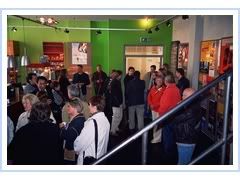
Thatta Kedona: The Toy Village of Pakistan documentary was released in in the movie theatre situated in the Centre of Berlin, Germany. All the active volunteers from 2004 were present to see the three hours documentary.
Joachim Polzer writes, "Dolls and tin toys reflecting regional cultures of Pakistan are products which generate cash income for the farming families through the local cooperative-like NGO. Volunteers from Western countries are also having fun by working creatively in a remote village of Islamic society with strong overlays by the traditional culture of Indus Valley (Harappa 3.000 B.C.), the Mogul period, influences from the colonial British-India period and the Punjab country culture. Hence the playfulness of a "toy village" is on both sides: for the villagers by manufacturing hand-craft toys for cash in a not-yet industrialized region avoiding rural exodus to the big cites (poverty slums that are generated in cities by migration). And on the other side one can notice the joy of Western volunteers being confronted at work by their own history framework but in present time and with a very foreign and sometimes strange context."
Labels: Dr. Norbert Pintsch, Dr. Senta Siller, Thatta Kedona
posted by S A J Shirazi @ 11:00 AM,
,
Architecture students from Lahore on excursion trip to TGD
Thursday, January 30, 2014

Thatta Ghulamka Dheroka, commonly called Dolls Village, has special attraction for all those who are interested in architecture and those who are interested in traditional housing. Thanks to the long standing experiences of the TTTC with simple technology and mud housing, combined with the cooperation with SPARC in Lahore that the common perception about local and environment friendly materials has undergone a fundamental change. Through the initiative IEC@BNU and through the FPAC Foundation, which publishes the quarterly magazine GREEN MAG, for the first time architecture students and professors have visited the project intentionally in order to acquaint themselves with the traditional mud architecture and how it exists in Thatta Ghulamka Dheroka. On their way to the village, between Lahore and Okara, the group also visited a Bio-Gas-Installation facility. Here are some images of the trip.
Labels: Dr. Norbert Pintsch, Mud Architecture, Mud Housing Project, Visitors
posted by S A J Shirazi @ 12:30 AM,
,
About Autonomous Bio-molecular and Poly-crystalline Organisms in Construction Structures
Monday, January 20, 2014
Labels: Dr. Norbert Pintsch, Housing
posted by S A J Shirazi @ 8:57 AM,
,
Annual Sports Day
Tuesday, October 29, 2013


After games School Ground the team members had lunch in Women Art Center of AFA.

On this occasion, interviews for Internet-Radio-tv-thatta village were also carried out.

And, that is the beauty of the dolls village – the people. Here are some of the images of the day.
Read more »
Labels: Dr. Norbert Pintsch, Education, FPAC, NGOs, SPARC
posted by S A J Shirazi @ 9:44 AM,
,
Dr Norbert Pintsch with Dr Azam Chaudhry
Friday, October 25, 2013

Labels: Dr. Norbert Pintsch
posted by S A J Shirazi @ 9:45 AM,
,
Activities in BHU
Thursday, October 24, 2013

Thanks to NGO AFA that Thatta Ghulamka Dheroka is always live and something keeps happening there. If one day it has a group of students from one university the other day are some visiters interested in rural and then there are volunteers who being ‘life’ to the village life.

Dr Norbert Pintsch is organizing a lot of different things where as Monika Kuppler is busy with her Pottery students. Volunteer lady Marlis from SES is busy in Basic Health Unit. Here you can see Marlis handing over the medicine in the village school and meeting with lady health visitors in the Basic Health Unit of NGO AFA.

Labels: BHU, Dr. Norbert Pintsch, Volunteers
posted by S A J Shirazi @ 3:31 PM,
,
Volunteers in TGD
Monday, October 21, 2013


Labels: Dr. Norbert Pintsch, Marlis Bartkiewitz, Monika Kuppler, SES, Thatta Kedona, Volunteers
posted by S A J Shirazi @ 8:00 AM,
,


